What’s with this phrase, “full-inclusion flour”? If you think that it’s another way of saying whole wheat flower, you’re not alone. And you can be forgiven if it sounds like a phrase designed to bring in more money for the same product–whole wheat bread.
Instead, full-inclusion flour is shorthand for bread-products made from the entire wheat berry.
Isn’t That Whole Wheat Flour?
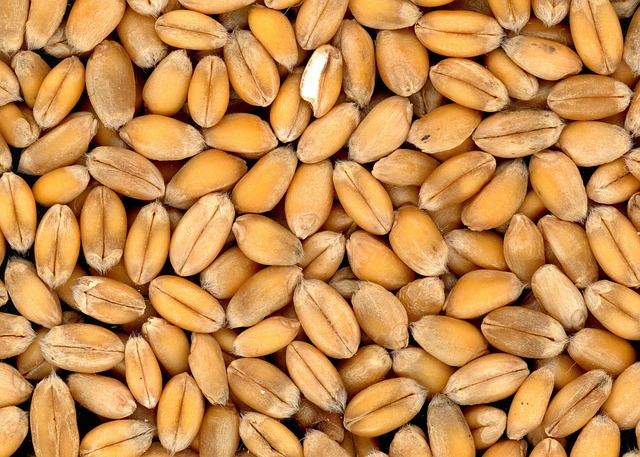
In a word: no.
Whole wheat flour is created by milling wheat berries into smaller grains. Next, the resulting grains are shifted into the three components of a flour berry–bran, germ, and endosperm through a multi-step process.
In the final step of this process, the three components of flour are recombined to make “whole wheat” flour. This is done by adding a percentage of the bran and wheat germ back into the white flour to create whole wheat flower. Since portions of the three components are extracted for other purposes, whole wheat is not whole grain.
The Anatomy of a Grain of Wheat
Before we continue, let’s review the parts of a wheat grain–the bran, endosperm, and germ.
- The grain’s bran, which is its outer shell, is rich in fiber and B vitamins.
- The endosperm, which makes up the majority of the kernel, is found inside the bran.
- The germ, the grain’s nutritional powerhouse, is also found inside the bran. It contains vitamins, minerals, antioxidants, and healthy fats.
The most commonly used method of milling in commercial bread is multiple-stream. The bran and germ, together with their nutrients, are separated during the production of processed wheat flour, leaving only the endosperm.
While being crushed, the grains are separated according to particle size into distinct millstreams. Further grinding is usually required for larger particles. All of the separated components come back together to form the final flour product. The goal of this technique is to produce homogeneous particle size.
The enriched, processed wheat flour that you buy, has iron and B vitamins added back in place of some of the elements that were lost during processing. Other elements, such as fiber, vitamin E, antioxidants, and healthy fats, may or may not be added back.
Whole Wheat versus the Wheat Kernel
So does whole wheat flour not contain the entire wheat kernel?
If you believe the people who produce whole wheat bread, the answer is yes. Manufacturers of whole wheat flour (who are in the business of selling it) claim it is exactly the same as full inclusion flour. They argue that since whole wheat flour contains similar proportions to the wheat berries it is created from, it has the same nutritional value.
However, if you sift through the internet (as I did), it becomes clear that there’s no clear answer.
Tufts Food Lab writes about the industrial production of wheat that
“because particles from different parts of the grain separate during the process, they can be manipulated separately and joined back together in varying proportions to achieve a specified end product.”
To add to the confusion, they write
“Some producers have capitalized on this marketing opportunity by first processing with stone milling and then finishing with roller milling.”
The Indonesian flour milling company Shriboga says about their separating process:
“It also allows for the extraction of valuable by-products, such as wheat germ oil, which has nutritional and industrial applications.”
The Institute of Culinary Education writes that
“Because the milled bran and wheat germ particles are too large for most bakers to use, they’ll run these through the mill again to break them down into smaller particles perhaps further reducing the nutritional value of the flour. This means you may be buying whole wheat flour but not necessarily whole grain.”
In Conclusion
You will not have to guess if you are getting the entire grain when you buy full inclusion flour or food made from full inclusion. The flour goes in the mill on end and comes out ready to be used for baking on the other.
In other words, you get the full benefits of flour.
Since baking with full inclusion flour requires some adjustments to your recipes, I will be sharing the recipes we have developed at Atla’s Bakery in the coming months.
 Stefan Ayers Wordsmith